
Built for HR | Free Download
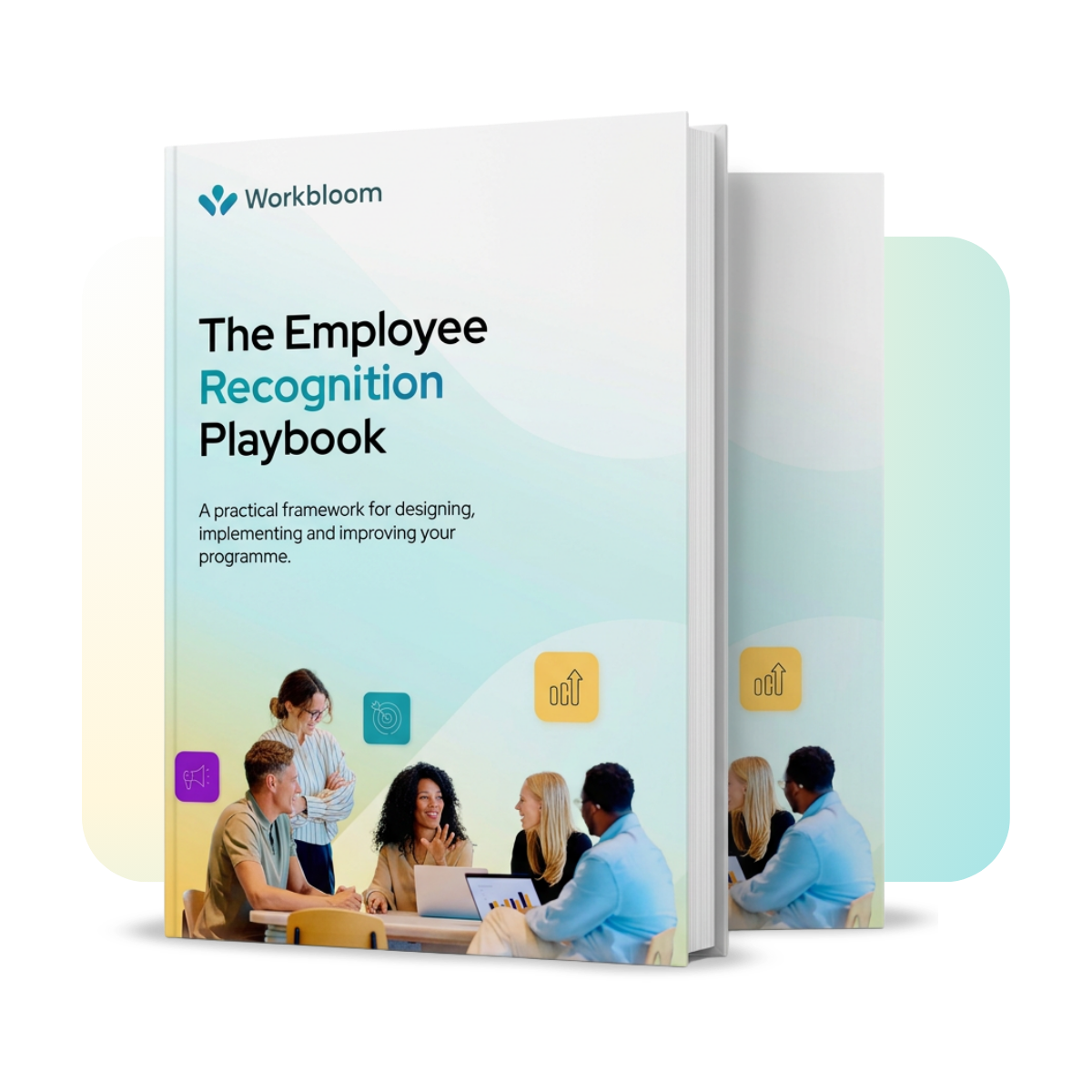
The Employee Recognition Playbook
A practical framework for turning employee recognition into a consistent, measurable part of your employee experience, covering recognition strategy, employee experience, flexible rewards, measurement and a practical 90-day roadmap.
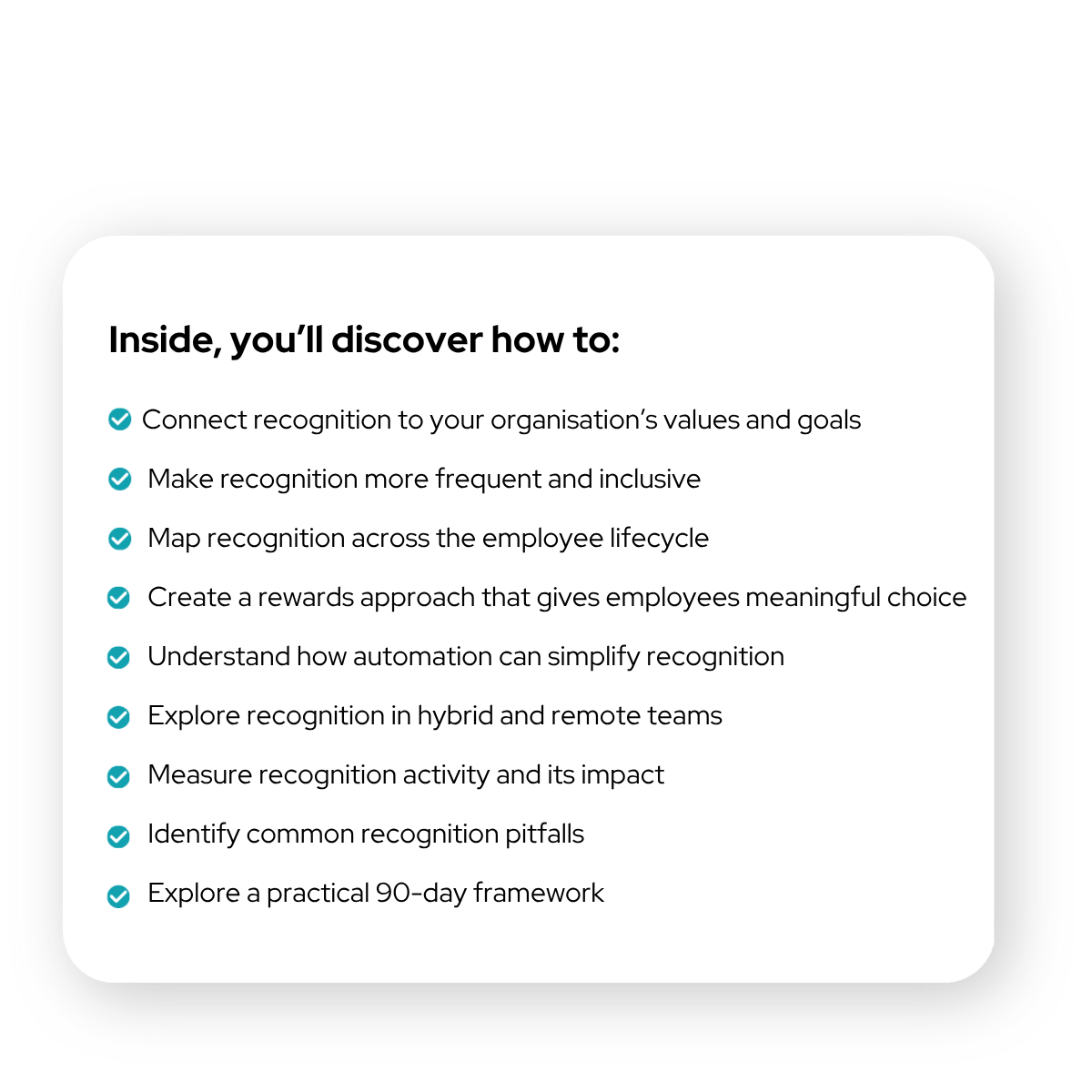
What’s inside
Recognition is easy to start. Making it work is harder.
Many organisations already recognise their people. The challenge is making recognition consistent, meaningful and scalable.
Recognition can become too focused on annual events, office-based visibility, generic messages or manual processes. The Playbook provides a structured way to look at your current approach and identify where there is room to improve.
Who's Its For
For HR and People teams planning or reviewing employee recognition.
Review and improve an existing recognition programme
Create recognition that works across teams and locations
Make recognition relevant for hybrid and remote employees
Choose recognition and reward approaches that fit your organisation
Decide what to measure and how to improve over time
A Practical 90-Day Starting Point for Your Employee Recognition Programme
Not sure where to start? The playbook gives you a practical 90-day framework to help you plan, build and begin rolling out an employee recognition programme - from understanding where you are today to testing your approach and refining it based on what you learn.
Days 1-30 | Discover & Design
Review your current recognition practices, gather employee feedback and define the goals, values and behaviours you want recognition to support.
Days 31 - 60 | Build & Pilot
Define your recognition approach, reward rules and budget, then test it with a small group of employees.
Days 61-90 | Launch & Refine
Expand your approach, monitor participation and feedback, and refine your programme based on what you learn.
What makes employee recognition actually meaningful?
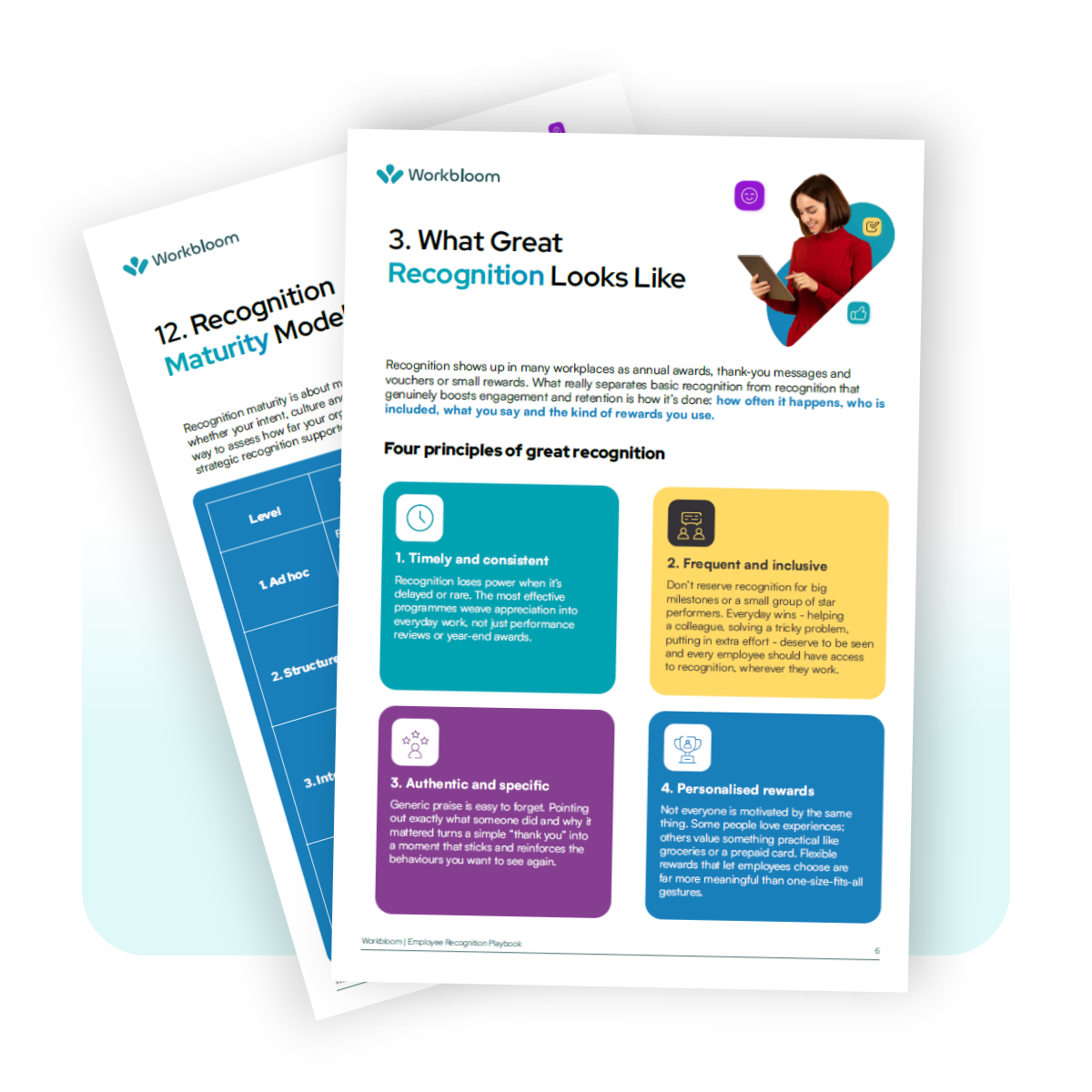
It’s not simply how often you say “thank you”. The Employee Recognition Playbook explores the principles, strategy and practical steps behind a recognition programme that is timely, inclusive, specific and meaningful -with guidance on rewards, technology and measurement.
Meet Workbloom
Workbloom is a cloud-based employee recognition platform designed specifically for HR teams who want to simplify and supercharge their rewards programs.
Make employee recognition simple, scalable and strategic with access to thousands of vouchers and prepaid cards your people actually value.

Frequently asked questions
How to build an employee recognition strategy that supports business goals?
Start by defining what you want recognition to influence rather than simply increasing the amount of recognition taking place. This could mean reinforcing specific company values and behaviours, improving how recognised employees feel, supporting engagement, or addressing retention in particular teams. From there, define what should be recognised, who can recognise whom, and how success will be measured.
What should an employee recognition programme recognise?
Recognition should go beyond major achievements and formal milestones. A well-designed programme can recognise everyday contributions such as helping a colleague, solving a difficult problem or demonstrating a company value. Defining specific behaviours linked to organisational values makes recognition more meaningful and helps reinforce the behaviours you want to see more often.
How to make recognition work across hybrid, remote and global teams?
Recognition should be accessible regardless of where someone works. Consider how employees across teams, locations and working arrangements can recognise and be recognised, and whether the reward experience works across different markets. The Employee Recognition Playbook specifically addresses recognition across hybrid and remote teams as part of a broader recognition strategy.
How to prove the value of employee recognition to leadership?
Build measurement into the programme from the beginning. Track participation, reach, frequency, recognition quality and reward spend, then consider relevant organisational measures such as engagement or retention over time. This gives HR a stronger evidence base than simply reporting how many recognition moments took place.
How to reduce employee turnover?
Employee recognition can be one part of a broader retention strategy. When recognition is consistent, meaningful and linked to the behaviours and contributions that matter, it can help employees feel valued and strengthen their connection to the organisation. The playbook highlights that 79% of employees say recognition makes them feel more engaged at work, while organisations can use measures such as engagement and voluntary turnover to assess whether recognition is contributing to wider outcomes.